
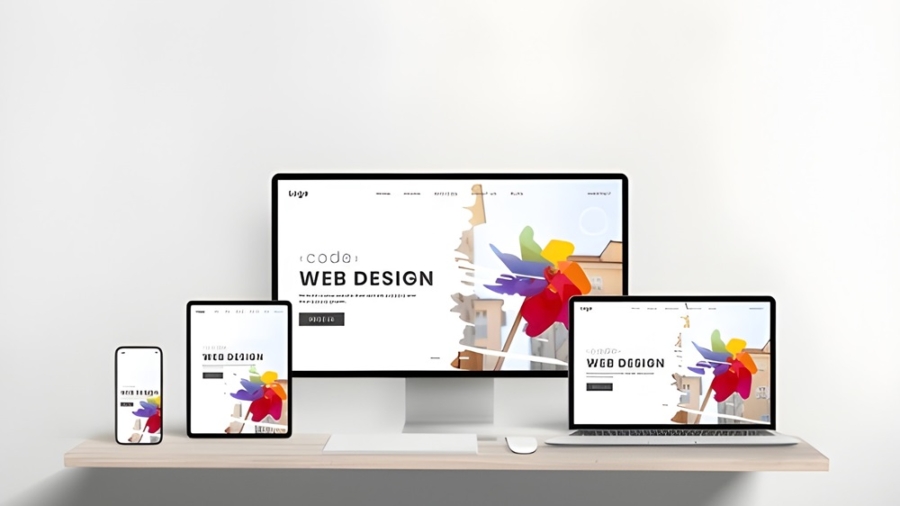
In today’s fast-paced digital world, having a website is no longer enough. Your site must be fast, visually appealing, easy to navigate, and most importantly mobile-friendly. With over 60% of global internet traffic coming from mobile devices, businesses that ignore mobile optimization are losing out on both users and rankings.
This article explores how a mobile-friendly website design boosts your SEO, why it matters in 2025, and what steps you can take to optimize your site for mobile devices.
📱 What Is a Mobile-Friendly Website Design?
A mobile-friendly website design, also known as responsive website design, is a web layout that automatically adjusts to different screen sizes and resolutions from smartphones and tablets to desktops.
It ensures that:
- Text is readable without zooming
- Menus and buttons are easy to tap
- Images and content adjust proportionally
- Pages load quickly on mobile networks
In essence, a mobile-friendly site offers a smooth and intuitive experience for mobile users, which directly impacts search engine rankings.
🔍 Google’s Mobile-First Indexing: Why It Matters
Since 2019, Google has switched to mobile-first indexing for all websites. This means:
“Google predominantly uses the mobile version of your content for indexing and ranking.”
If your website performs poorly on mobile devices slow loading, broken layouts, unreadable text, Google is likely to penalize your rankings.
In 2025, mobile optimization is no longer a feature it’s a fundamental SEO requirement.
✅ How a Mobile-Friendly Website Design Boosts Your SEO
Let’s dive into the major ways mobile-friendly design directly affects your SEO:
1. Improves Google Rankings
As part of mobile-first indexing, Google rewards websites that are fully optimized for mobile devices. When your site is responsive, it:
- Improves user experience
- Reduces bounce rates
- Increases dwell time
These are key behavioral signals Google uses to determine your page’s relevance and value.
2. Enhances User Experience (UX)
User experience is at the core of modern SEO. A mobile-friendly design ensures:
- Easy navigation on smaller screens
- Clear call-to-action (CTA) buttons
- Fast interactions without friction
If users can’t interact smoothly, they leave which leads to higher bounce rates and lost SEO opportunities.
Google’s algorithm favors websites that provide seamless UX across devices.
3. Reduces Bounce Rate and Increases Engagement
If your website looks broken or loads slowly on a smartphone, visitors will leave immediately. Google sees this as a sign of low quality.
By improving your mobile layout and usability:
- Visitors stay longer
- They click more pages
- They’re more likely to convert
All these engagement metrics signal to Google that your website deserves higher rankings.
4. Boosts Local SEO and Voice Search Visibility
A huge chunk of mobile searches are local. Queries like:
- “Best digital marketing agency near me”
- “SEO services in Gandhinagar”
- “Restaurants open now”
Google prioritizes mobile-friendly websites in local search results, especially those with:
- Fast loading speeds
- Click-to-call buttons
- Local business schema
- Location-based content
Also, voice search (used primarily on mobile) heavily relies on mobile-optimized, fast-loading pages.
5. Faster Page Load Speeds = Better Rankings
Page speed is a confirmed Google ranking factor. On mobile, where users often rely on 4G/5G or limited data, loading time becomes even more critical.
A mobile-friendly website uses:
- Compressed images
- Lazy loading
- Clean code
- Content Delivery Networks (CDNs)
These improvements not only create a better experience but also help your website rank higher in mobile search results.
6. Improves Mobile Conversion Rates
SEO is not just about traffic; it’s about conversions. A mobile-optimized website design ensures:
- CTA buttons are easy to click
- Forms are mobile-compatible
- Payment gateways work smoothly
This improves your conversion rate from organic mobile traffic, increasing your business revenue.
7. Reduces Duplicate Content and Improves Crawl Efficiency
With responsive design, you maintain one version of your content for all devices avoiding:
- Duplicate content (which hurts SEO)
- Split backlinks between desktop and mobile versions
- Confusion for Googlebot during crawling
Google prefers responsive designs because they’re easier to index, manage, and update.
🚫 What Happens If Your Website Is Not Mobile-Friendly?
If your website is not optimized for mobile, expect:
- Lower rankings in both mobile and desktop searches
- Decreased user engagement
- Higher bounce rates
- Lost leads and sales
- Poor brand perception
Google has even started displaying “Not mobile-friendly” warnings in search results, which can turn users away before they even click your link.
🧠 Key Elements of a Mobile-Friendly Website Design
Here’s a checklist to ensure your site meets modern mobile SEO standards:
| Element | Description |
| Responsive Design | Automatically adapts to screen size |
| Mobile Navigation | Collapsible menus, large buttons, sticky headers |
| Readable Fonts | No zooming required; scalable text |
| Fast Loading Speed | Optimized images, minified code, fast hosting |
| Touch-Friendly UI | Easy to tap links and forms |
| Optimized Images | Compressed and mobile-sized visuals |
| Clear CTAs | Prominent and clickable without errors |
| No Pop-Ups | Avoid intrusive interstitials on mobile |
📌 Final Thoughts
In 2025 and beyond, having a mobile-friendly website design is not optional, it’s a core requirement for SEO success.
From better Google rankings to higher conversion rates, the benefits of mobile optimization are clear and measurable. If your website isn’t responsive, fast, and user-friendly on mobile, you’re losing valuable traffic, leads, and brand credibility.
Whether you’re running a blog, an eCommerce store, or a service business, now is the time to prioritize mobile SEO.